The Benefits of Jigsaw Puzzles on Spatial Awareness in Preschoolers
Understanding the Impact of Jigsaw Puzzles on Cognitive Growth
Jigsaw puzzles are not just enjoyable games; they serve as powerful tools for cognitive development in young children. For preschoolers, engaging with puzzles can enhance their spatial awareness, a critical skill that plays a foundational role in various aspects of learning and everyday life. This facet of cognition helps children understand their relationship with the environment and aids in navigating both physical and conceptual spaces.
Research shows that spatial awareness is essential for:
- Mathematical understanding: Children need to comprehend shapes and numbers, and how they correlate in physical space. Skills such as measuring, estimating, and visualizing geometrical concepts rely heavily on a solid foundation of spatial reasoning.
- Reading comprehension: Strong spatial awareness aids in understanding narratives that involve settings, character movements, and layouts described in texts. Children can better follow along when they can visualize the story elements.
- Scientific reasoning: Many scientific concepts, such as understanding diagrams and models or grasping concepts like force and motion, are inherently spatial. Children who excel in spatial tasks often perform better in subjects like physics and biology later in their academic careers.
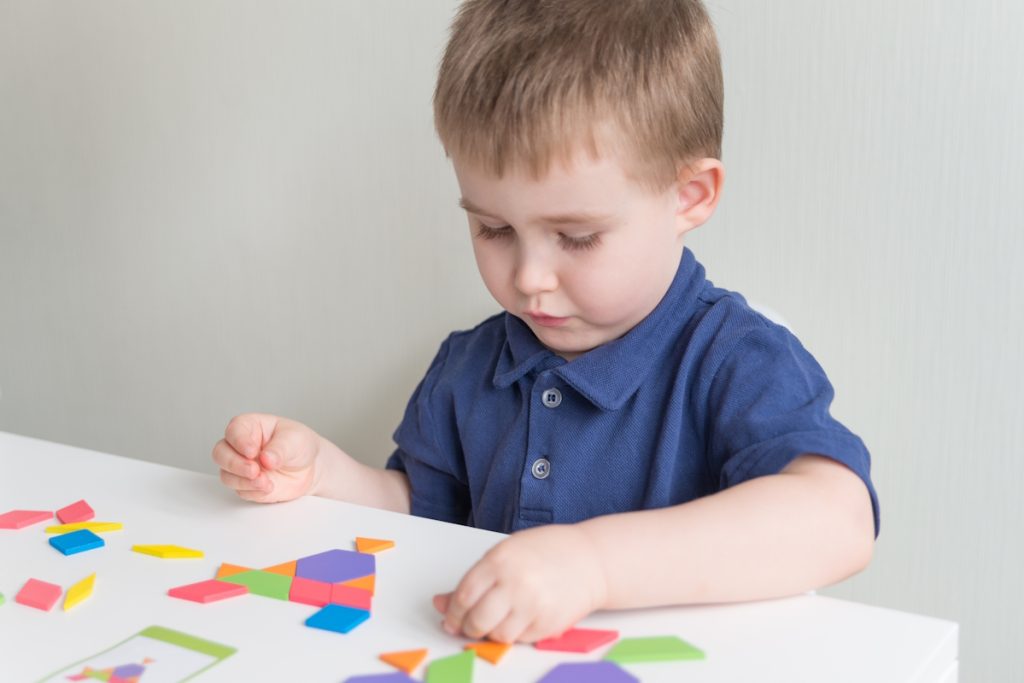
When preschoolers assemble jigsaw puzzles, they engage in a range of activities that promote mental growth. These include:
- Visualizing how pieces fit together: Kids must think ahead, picturing which pieces might slot into confusing gaps, fostering their ability to visualize objects from different angles.
- Recognizing patterns and shapes: Children learn to identify colors, shapes, and patterns as they sort through puzzle pieces, honing their ability to make connections between different ideas and objects.
- Improving hand-eye coordination: Manipulating puzzle pieces helps strengthen fine motor skills as children develop coordination between their hand movements and visual input.
Playing with jigsaw puzzles stimulates a child’s creative thinking and problem-solving abilities. As they manipulate the pieces, they begin to understand spatial relationships and navigate their surroundings more effectively. This early exposure can lead to significant advantages in their academic journey and everyday interactions. For instance, children who regularly engage with puzzles may find it easier to understand concepts like maps and layouts in geographies, which will be invaluable as they progress through school.
Moreover, in the United States, where early childhood education programs increasingly emphasize STEM (Science, Technology, Engineering, and Mathematics), the skills developed through jigsaw puzzles align perfectly with these educational goals. Family activities involving puzzle completion not only bolster spatial skills but also foster emotional connections, teamwork, and communication among family members.
In conclusion, introducing jigsaw puzzles to preschoolers isn’t just about providing them with a fun activity; it is an investment in their cognitive development. The skills acquired through puzzle-solving will help shape children into more capable, well-rounded individuals, equipped to tackle academic challenges and everyday problem-solving tasks with confidence.
DISCOVER MORE: Click here to learn how video games can boost focus
Unlocking the Mind: The Role of Jigsaw Puzzles in Cognitive Skill Development
The act of piecing together a jigsaw puzzle transcends mere entertainment; it is a catalyst for enhancing spatial awareness in preschoolers. As children work diligently to connect the pieces, they are unknowingly training their brains to understand and interact with the world around them. Each completed puzzle serves as a small victory, instilling confidence while simultaneously promoting critical skills essential for future academic success.
According to a study published in the journal Developmental Psychology, children who engage with spatially challenging toys, including jigsaw puzzles, exhibit improved spatial skills compared to those who do not. This improvement is particularly pronounced during the preschool years, a pivotal time for cognitive growth. The benefits of engaging with puzzles extend well beyond the immediate gratification of completion; they lay the groundwork for lifelong skills in various fields such as mathematics, reading, and science.
When children manipulate pieces, they gain hands-on experience with a variety of spatial concepts. Here are some specific abilities that are enhanced through puzzle play:
- Transformational skills: As children rotate and manipulate pieces, they learn to visualize how movements can affect the outcome. This helps develop their ability to understand spatial transformations, which is critical for tasks in geometry and design.
- Problem-solving tactics: Figuring out where a piece fits encourages children to think critically. They learn to troubleshoot, testing different options until they find the right fit, which not only boosts their cognitive confidence but also cultivates persistence.
- Memory retention: Jigsaw puzzles encourage kids to remember the shapes, colors, and patterns of pieces they have already examined. This active recall strengthens their memory, a skill that will benefit them across all subjects.
In addition to the cognitive advantages, jigsaw puzzles also foster valuable social skills as preschoolers often engage in collaborative play with peers or family members. Working together to solve puzzles encourages teamwork and communication, teaching children how to express their ideas and listen to others. This cooperative experience can be particularly beneficial in setting the stage for successful group interactions in school settings.
As the United States places increasing emphasis on early childhood education programs that incorporate STEAM (Science, Technology, Engineering, Arts, and Mathematics), it becomes essential for parents and educators to recognize the integral role of spatial skills. By integrating jigsaw puzzles into playtime, caregivers provide children not only with enjoyment but also with a profound educational benefit that aligns with contemporary learning pathways.
In essence, the act of completing a jigsaw puzzle represents far more than just assembling a pretty picture; it is a framework through which preschoolers can hone spatial awareness and develop essential skills that will serve them throughout their educational journeys. The interplay of challenge and fun keeps children engaged, making puzzles an enduring choice for enriching the critical early years of development.
| Category | Key Features |
|---|---|
| Cognitive Development | Jigsaw puzzles enhance problem-solving skills by requiring children to think critically about how pieces fit together. This fosters cognitive flexibility. |
| Fine Motor Skills | Manipulating puzzle pieces helps preschoolers refine their hand-eye coordination and dexterity, which are essential for writing and other tasks. |
Introducing jigsaw puzzles into playtime can significantly boost both cognitive and physical development in young children. Engaging with these colorful pieces not only entertains but also educates. Research indicates that regular interaction with puzzles correlates with improved spatial reasoning skills, which are critical in subjects like math and science later in life. Through strategic play, children learn to recognize patterns, shapes, and spatial relationships—hallmarks of a well-rounded cognitive foundation. Moreover, as toddlers grasp and manipulate puzzle pieces, they’re not just having fun; they are also strengthening muscle memory in their fingers and hands. This practice lays the groundwork for future writing skills. The enjoyment that jigsaw puzzles bring can inspire a love for learning that lasts a lifetime.
DIVE DEEPER: Click here to learn more
Building Blocks of Spatial Understanding: Jigsaw Puzzles in Action
In the quest to cultivate spatial awareness in preschoolers, the integration of jigsaw puzzles proves to be an engaging study in hands-on learning. Emerging research suggests that the impact of puzzles extends into areas we might not typically associate with simple play. The cognitive benefits experienced through puzzle engagement align seamlessly with advancements in educational approaches across the United States, where an increasing focus is placed on developing well-rounded skills from an early age.
A recent report from the National Association for the Education of Young Children (NAEYC) supports that children who regularly participate in activities requiring spatial reasoning, such as jigsaw puzzles, show marked improvement in skills crucial for early literacy and numeracy. For instance, studies indicate that children skilled at visualizing spatial transformations excel in early math concepts, such as fractions and measurement. Puzzles serve as an active platform for fostering such skills, enabling children to practice positions, orientations, and relations of objects, which in turn enhances their mathematical understanding.
Moreover, one cannot overlook the remarkable development of fine motor skills linked to puzzle play. As young learners grasp pieces, they refine their hand-eye coordination and dexterity, essential components for writing and basic tasks in the classroom. This not only aids them in completing puzzles but also translates into improved readiness for academic activities. The precision required for effective puzzle-solving equips children with the tools to master more complex tasks later in their educational journey.
The versatility of jigsaw puzzles is another noteworthy aspect. With a plethora of themes available—from animals to geography—children can immerse themselves in various subjects while honing their spatial skills. The incorporation of themed puzzles invites educators to craft learning experiences that mesh with broader curriculum goals. For example, a geography-themed jigsaw can not only teach about world landmarks but can also enhance spatial awareness as children learn to visualize the relationships between different countries and continents.
Engagement with jigsaw puzzles also has an exciting social dimension. Collaborative puzzle work provides preschoolers with the opportunity to develop critical social skills such as negotiation, sharing, and patience. Educators have noted that these interactions create a natural setting for children to practice verbal communication skills, enhancing their language development as they articulate their thoughts and strategies during a collaborative puzzle session. The joy of shared success further solidifies friendships, creating an inclusive environment conducive to learning.
Additionally, puzzles can serve as a bridge to technology in preschool settings. The rise of digital jigsaw puzzles complements traditional, physical puzzles, offering children a unique twist on the pastime. Numerous apps designed for preschool-aged children allow them to experience the same cognitive benefits while adding elements of interactive play. This can engage kids who are particularly drawn to screens, maintaining their interest and helping educators incorporate technology into a balanced learning approach.
As parents and educators continue to seek efficient methods to foster cognitive growth among preschoolers, jigsaw puzzles remain a timeless choice. The exploration provided through the intricacies of assembling pieces supports a composite development approach, ultimately cultivating spatial awareness—an essential framework for lifelong learning.
DISCOVER MORE: Click here to delve into the connection
Enhancing Future Potential Through Puzzle Play
In conclusion, the integration of jigsaw puzzles into preschool curricula offers far-reaching benefits beyond mere entertainment. These engaging activities serve as a powerful tool in promoting spatial awareness, equipping young learners with essential cognitive skills that lay the groundwork for future academic success. The evidence underscores that regular interaction with puzzles can enhance not just spatial reasoning but also early literacy and numeracy, proving pivotal in a child’s developmental journey.
Moreover, the fine motor skills honed during puzzle assembly cannot be overstated. The delicate maneuvering required to fit pieces together fosters hand-eye coordination, fine-tuning dexterity that children need as they progress into more complex academic challenges. By transitioning from physical puzzles to digital formats, educators can further engage preschoolers, marrying tradition with technology and maintaining their enthusiasm for learning.
In addition to cognitive and motor development, the social interaction that arises during collaborative puzzle-solving nurtures communication skills and essential attributes such as teamwork and patience. This social dimension enriches the preschool experience, crafting a supportive learning environment that encourages children to articulate their thoughts and strategies effectively. Overall, jigsaw puzzles encapsulate a holistic approach to learning, merging cognitive skills with social-emotional growth.
As parents and educators embrace the value of jigsaw puzzles in early childhood education, they not only enhance spatial awareness but also cultivate a generation of well-rounded learners prepared to navigate the complexities of the world. By prioritizing such activities, we unlock a treasure trove of potential that paves the way for lifelong success.
Related posts:
The Role of Strategy Games in Developing Critical Thinking Skills in Adults
The Influence of Online Puzzle Games on Cognitive Development and Digital Literacy in Young Adults
The Impact of Logic Puzzles on Problem-Solving Skills in Children
How Mind Games Enhance Memory Retention in Adolescents
The Effects of Escape Room Challenges on Teamwork and Social Skills in Young Adults
The Role of Video Games in Enhancing Attention and Focus in Middle School Students

Linda Carter is a writer and puzzle expert specializing in mind games, brain teasers, and cognitive challenges. With extensive experience helping individuals enhance their problem-solving skills and think critically, Linda shares her knowledge on our platform. Her goal is to empower readers with practical advice, engaging puzzles, and strategies to sharpen their minds and achieve success in the captivating world of mind games and puzzles.