
How Strategy-Based Mind Games Can Foster Intrinsic Motivation in Learning
Unlocking Potential Through Engaging Challenges
In an era where traditional education methods often struggle to resonate with tech-savvy students, strategy-based mind games have emerged as a transformative approach to make learning not only engaging but also impactful. These games offer an enticing blend of challenge and enjoyment, fostering a deeper intrinsic motivation among students. As educators seek innovative ways to captivate interests, the inclusion of mind games has become indispensable.
Studies indicate that the cognitive engagement required in mind games is particularly beneficial. For instance, games like chess and sudoku do not simply serve as pastimes; they act as training grounds for vital skills. When immersed in these games, students encounter complex problems that require them to think critically and develop strategic solutions. This method effectively cultivates problem-solving abilities, empowering students to face challenges with confidence. A prime example of this can be seen in classrooms where chess clubs have formed. Students, through regular practice, not only improve their chess skills but also enhance their ability to analyze situations and plan several moves ahead, akin to real-life problem-solving scenarios.
Another significant advantage of mind games lies within their ability to stimulate critical thinking. Engaging in games that involve strategy and foresight encourages players to weigh risks and rewards, enhancing analytical skills. The appeal of games such as Risk or Settlers of Catan is that students must continually adapt their strategies based on their opponents’ moves, thus sharpening decision-making skills. This kind of environment mirrors situations they will encounter in both academic settings and future workplaces, where adaptability is key.
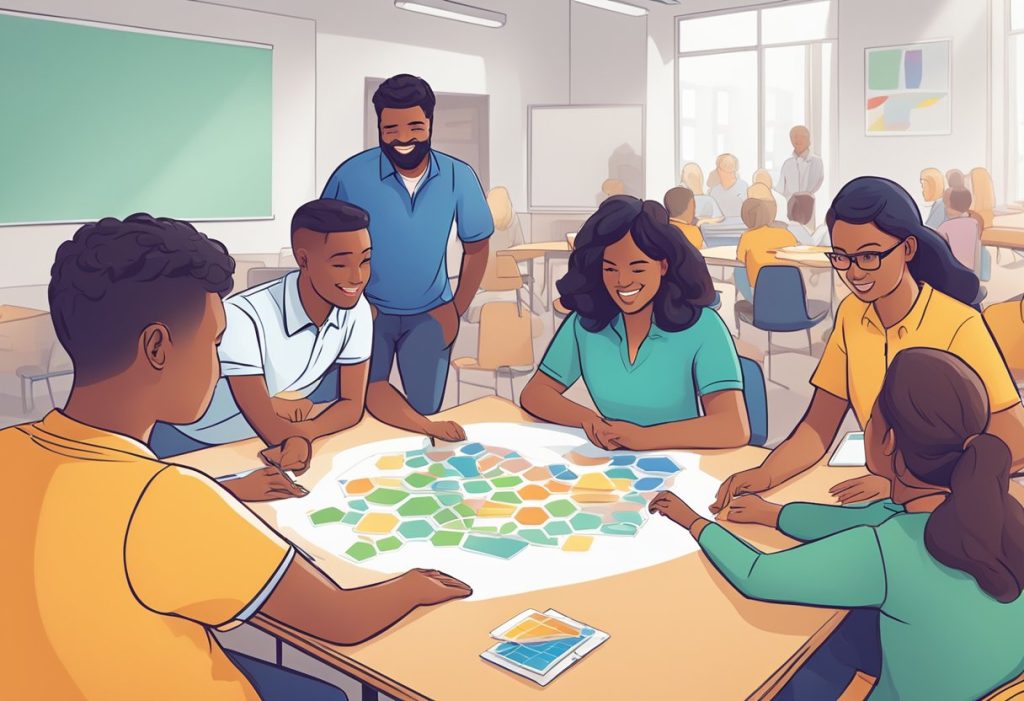
Furthermore, the collaborative nature of many strategy-based games fosters essential social skills. Games requiring teamwork—like Capture the Flag or cooperative video games—motivate students to communicate effectively and negotiate with peers, leading to improved interpersonal relations. As students learn to work together towards common goals, they develop not only social awareness but also resilience—a vital trait in today’s collaborative world.
One of the standout features of these games is the way they provide learners with opportunities for goal-setting and self-challenge, making each victory feel rewarding. This process is enhanced through aspects such as:
- Immediate Feedback: Players can instantly see the outcomes of their decisions, allowing for swift adjustments and learning. This immediacy creates a loop of motivation that keeps learners engaged.
- Personalization: Many games allow modifications in difficulty, making them suitable for a diverse range of skill levels. Tailoring challenges ensures that each student is appropriately challenged, increasing the likelihood of success.
- Creativity: Mind games often encourage unconventional solutions, granting students the space to explore innovative tactics that might otherwise go unnoticed in a standard educational framework.
As we continue exploring the integration of these games into educational practices, the potential to ignite intrinsic motivation becomes increasingly apparent. The far-reaching implications of such an approach are not just beneficial for individual learning experiences but also herald a shift in educational methodologies, paving the way for a more engaging and holistic approach to education. Embracing the potential of strategy-based mind games represents an exciting frontier in the quest for effective learning strategies in the United States and beyond.
DIVE DEEPER: Click here to discover more
The Psychological Benefits of Strategy Games in Education
One of the most compelling aspects of strategy-based mind games is their profound psychological impact on learners, specifically in cultivating intrinsic motivation. Unlike extrinsic motivators, such as grades or prizes, intrinsic motivation originates from within the student, driven by personal interests and the inherent satisfaction gained from achieving something challenging. Through engaging, non-linear gameplay, students often experience a sense of accomplishment that fuels their desire to learn and develop further.
Research highlights the idea that games create a unique environment where failure is embraced as part of the learning process. This resilience is vital to fostering a growth mindset, a concept popularized by psychologist Carol Dweck. When students engage with strategy games, they are often faced with situations requiring them to make choices and evaluate their consequences. In doing so, they cultivate a habit of reflective thinking that is essential for deeper understanding in any learning context. For example, a player who frequently loses at chess learns to analyze their mistakes and adapt their strategies, ultimately becoming more proficient over time.
The interplay of goal-setting and self-efficacy in these games significantly enhances intrinsic motivation. Participants are encouraged to set individual objectives and then monitor their progress within the game. This process can mirror academic goal-setting. When students achieve a challenging objective within a game, they acquire a sense of agency that can translate into their academic lives. The concept of SMART goals—Specific, Measurable, Achievable, Relevant, and Time-bound—is reinforced by the systematic approach various games naturally require.
Additionally, the strategic nature of these games fosters higher-order thinking skills, which further motivates students. In games like chess or Go, players are required to anticipate their opponents’ moves, consider multiple outcomes, and devise complex strategies. This level of cognitive engagement translates to mastery and a greater understanding of academic subjects such as mathematics, sciences, and social studies. Some educators have noticed that students who struggle to connect with traditional learning methods exhibit increased enthusiasm when engaged in strategy-based activities.
Moreover, the collaboration aspect of many strategy games allows learners to experience accomplishment collectively, fostering a sense of community. When students engage in games such as cooperative board games or team-based video games, they develop vital social skills, enhancing their communication abilities and promoting teamwork. Such experiences teach learners to value diverse perspectives, paving the way for a more inclusive classroom environment.
In conclusion, the integration of strategy-based mind games into educational frameworks can ignite a spark of intrinsic motivation among learners. By offering an interactive platform to enhance critical thinking, resilience, and goal-setting, educators can create an enriching landscape where students are excited and motivated to learn. As we delve further into practical implementations of these games in schools, the potential for fostering a lifelong love of learning becomes increasingly clear.
Exploring the Impact of Strategy-Based Mind Games
Strategy-based mind games are highly effective tools in enhancing student engagement by nurturing intrinsic motivation. These games challenge learners to think critically and strategize, which can significantly improve their cognitive abilities. When students encounter problems that require them to design solutions, they become active participants in their learning journey, leading to a deeper understanding of the subject matter.One striking aspect of these games is their ability to create a safe space for experimentation. Learners can try different approaches without the fear of punitive consequences that are often associated with traditional learning environments. This freedom encourages them to develop resilience and a growth mindset. For instance, games like chess or Sudoku not only enhance strategic thinking but also promote patience and careful analysis, as learners realize that mistakes can be part of a positive learning experience.Moreover, the incorporation of gamification elements in strategy-based mind games can further elevate intrinsic motivation. Points, levels, and badges serve as motivating factors that do not solely rely on external rewards. Instead, they foster a sense of accomplishment and personal satisfaction as learners progress. This gamified approach aligns well with educational theories that emphasize the self-determination of learners, empowering them to take charge of their educational outcomes.Using tools like collaborative games can further amplify this effect. When learners work together, they share knowledge, strategize collectively, and foster social bonds that can contribute to a supportive learning community. This collaborative atmosphere can be vital in keeping learners engaged and motivated, cultivating an environment of mutual growth where intrinsic motivation thrives.Lastly, integrating real-world applications within these mind games can enhance the learning experience. By connecting game strategies with real-life scenarios, learners see the relevance of their skills beyond the classroom. This connection can ignite a passion for learning that sustains their motivation over time, encouraging them to explore further and grasp the practical significance of their educational pursuits.
| Category 1 | Category 2 |
|---|---|
| Engagement | Active participation in learning through critical thinking. |
| Safe Environment | Encourages experimentation and builds resilience. |
| Gamification | Fosters a sense of accomplishment through personal achievements. |
| Collaboration | Enhances social bonds and promotes a supportive learning community. |
| Real-World Connections | Demonstrates practical relevance of skills learned. |
The use of strategy-based mind games in learning promotes a comprehensive understanding of the material. By engaging students in ways that spark their interest and foster a love for learning, educators can cultivate an environment where intrinsic motivation flourishes, paving the way for lifelong learners.
DISCOVER MORE: Click here to delve deeper
Engaging Learning Environments Through Strategy Games
Building on the intrinsic motivational benefits, strategy-based mind games create engaging learning environments that also foster creativity and innovation among students. The challenge inherent in these games requires learners to think outside the box and devise unique solutions to complex problems, which aligns with the principles of constructivist education. In essence, students do not just absorb information; they actively construct knowledge through exploration and experimentation within the game context.
For instance, games like StarCraft II not only demand strategic decision-making but also encourage players to develop new tactics and adapt to ever-changing scenarios. This adaptability is crucial for learners in all disciplines, particularly in STEM fields, where problem-solving and innovative thinking are paramount. By navigating through diverse game challenges, students are prompted to step into the mindset of innovators, equipping them with critical skills that extend beyond the classroom.
Moreover, the immediacy of feedback in strategy games is a powerful motivator. Unlike traditional educational assessments, where learners might wait weeks for grades, games provide on-the-spot feedback about their strategies and decisions, which can be immensely beneficial for intrinsic motivation. For example, when students play a game like Settlers of Catan, they receive real-time feedback on their resource management and negotiation skills, leading to a continuous cycle of adjustment and improvement. Such environments help learners quickly recognize the effect of their choices, fostering a deeper understanding of cause and effect.
The adaptability of strategy games is also evident in their ability to cater to varying skill levels. Educators can facilitate differentiated learning experiences, allowing students to tackle challenges suited to their abilities in a competitive yet supportive environment. Options such as online multiplayer platforms can accommodate varied skill sets, creating a balanced challenge that motivates all participants, from novices to seasoned players. This inclusivity can enhance self-esteem and a sense of belonging among students, further boosting intrinsic motivation.
In addition, successful storytelling, woven into many strategy games, captivates students’ imaginations and enhances their motivation to engage. Games like Civilization VI not only provide complex strategic challenges but also immerse students in rich narratives and historical contexts. This storytelling aspect can turn learning into an adventure, allowing students to explore vast realms of history, politics, and culture within the fabric of gameplay. Such narrative engagement fosters emotional connections that can invigorate learners, making them eager to dive deeper into related academic subjects.
Finally, the concept of competition and personal challenge amplifies intrinsic motivation in strategy games. Many students thrive in competitive settings, where they can aim to improve their rankings or personal bests. Engaging in healthy competition pushes learners to hone their skills and continually seek advancement without the need for external rewards. This drive to excel can translate to enhanced academic efforts, as students may apply the same tenacity for improvement they demonstrated in gameplay to their studies.
Incorporating a framework of strategy-based mind games within educational settings not only enhances learning experiences but also develops lifelong skills necessary for success in an ever-changing world. As more educators recognize the importance of fostering intrinsic motivation through engaging, dynamic, and immersive environments, the impact of mind games in academia continues to unfold in transformative ways.
DISCOVER MORE: Click here to learn about the benefits of jigsaw puzzles
Unlocking Potential Through Strategy-Based Learning
In conclusion, strategy-based mind games represent a significant paradigm shift in education, seamlessly marrying enjoyment with learning to foster intrinsic motivation. By engaging students in challenging simulations, these games encourage problem-solving, innovative thinking, and adaptability—key qualities that are increasingly essential in today’s fast-paced world. The immediacy of feedback not only powers students’ reflections on their strategies but also cultivates a rich learning environment where mistakes become opportunities for growth.
Furthermore, the capacity of strategy games to accommodate diverse skill levels promotes inclusivity, allowing all learners to participate actively and feel a sense of belonging. When students immerse themselves in the compelling narratives of games like Civilization VI, they do not simply learn content; they experience history and culture in dynamic ways that deepen their academic engagement.
Additionally, the competitive nature of these games spurs personal improvement and resilience, attributes that extend beyond gaming into academic and life pursuits. As educational institutions increasingly recognize the transformative power of strategy games, it becomes clear that these tools not only enhance educational outcomes but also prepare learners for the complexities of modern challenges.
Ultimately, embracing strategy-based mind games in learning environments holds the potential to ignite a passion for knowledge, cultivate essential skills, and promote lifelong learning. As researchers and educators continue to explore the connections between gaming and education, the findings could reshape traditional pedagogies, ultimately unlocking the full potential of students worldwide.
Related posts:
Unlocking Creativity: How Riddles Can Inspire Innovative Thinking and Motivation
How Puzzles Can Serve as a Rewarding Break to Boost Productivity
The Impact of Competitive Puzzle Solving on Team Motivation and Cohesion
Using Brain Teasers to Cultivate a Growth Mindset and Resilience
The Influence of Puzzle Challenges on Personal Goal Achievement and Motivation
The Psychological Benefits of Collaborative Puzzle Solving in Fostering Motivation and Team Spirit

Linda Carter is a writer and puzzle expert specializing in mind games, brain teasers, and cognitive challenges. With extensive experience helping individuals enhance their problem-solving skills and think critically, Linda shares her knowledge on our platform. Her goal is to empower readers with practical advice, engaging puzzles, and strategies to sharpen their minds and achieve success in the captivating world of mind games and puzzles.