
Understanding Task Management and the Eisenhower Method
In the hustle and bustle of contemporary life, many individuals find themselves overwhelmed by an increasingly demanding schedule. The balancing act of work, family, and personal commitments can lead to inefficiencies that contribute to stress and burnout. A robust solution lies in the Eisenhower Method, a time-tested framework for task prioritization that can significantly enhance your productivity and mental well-being.
The essence of the Eisenhower Method is rooted in the critical distinction between what is urgent and what is important. This differentiation allows individuals to engage meaningfully with their tasks rather than reacting impulsively to immediate pressures. The beauty of this approach is not just about accomplishing more; it’s about accomplishing the right things. Let’s explore how this method can transform your daily routine and decision-making processes.
Key Benefits of the Eisenhower Method
- Clarify your priorities: This method empowers you to identify tasks that directly contribute to your long-term objectives. For instance, if professional growth is your goal, you might prioritize skill development over less significant administrative duties.
- Reduce stress: Addressing the urgency surrounding tasks allows you to tackle them systematically, minimizing the pressure of last-minute rushes. This can be particularly beneficial when facing project deadlines or family commitments.
- Improve productivity: By concentrating on tasks that align with your true priorities, you can allocate your time and energy more efficiently, leading to greater output without a corresponding increase in stress levels.
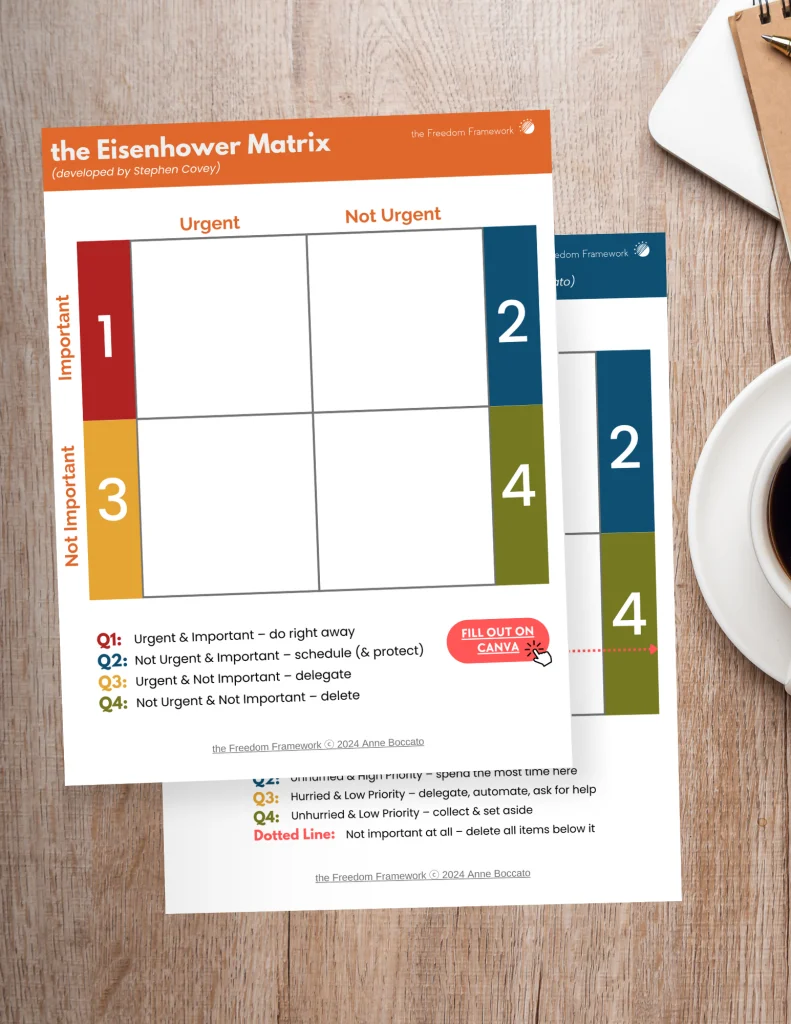
Consider the common scenario of being bombarded by sudden requests—emails demanding immediate responses or unexpected meetings that disrupt your workflow. The Eisenhower Matrix serves as a strategic guide to categorize these demands into four distinct quadrants for better management:
- Urgent and Important: Tasks such as an impending project deadline or a health crisis must be prioritized and addressed immediately.
- Important but Not Urgent: Activities like strategic planning or professional development can be scheduled for a later time, ensuring you allocate time for meaningful growth rather than just urgent matters.
- Urgent but Not Important: Delegate these tasks when possible. For instance, routine reporting could be assigned to a colleague, freeing you to focus on initiatives that require your expertise.
- Neither Urgent nor Important: These tasks often clutter your to-do list. Identify them and either eliminate or minimize their impact on your time.
Implementing the Eisenhower Method can dramatically reshape how you approach your responsibilities. By fostering a proactive mindset, you not only streamline your to-do list but also cultivate a culture of intentionality in your efforts. This method encourages a deeper understanding of your own priorities, ultimately paving the way for a more effective and fulfilling life.
For those eager to explore further, consider integrating digital tools and applications designed to facilitate the Eisenhower Method. Platforms like Trello or Todoist can help visualize your task categories, making it even easier to adhere to this transformative approach. In the realm of time management, adopting such tailored strategies can be the difference between mere task completion and achieving your fullest potential.
How the Eisenhower Matrix Works
The Eisenhower Method operates on a fundamental shift in how we perceive and approach our daily tasks. By using the framework of the Eisenhower Matrix, individuals can break down their responsibilities into four manageable categories. This structured approach not only provides clarity but also fosters diligent decision-making, allowing you to focus on what truly matters.
By categorizing tasks based on urgency and importance, the Eisenhower Method provides insights that can help you allocate your time and resources more effectively. Here is a closer examination of each quadrant within the matrix and the actions recommended for optimal task management:
- Urgent and Important: These tasks are immediate and critical, necessitating your attention right away. Think about deadlines for key projects, health emergencies, or urgent client requests. These should be prioritized and tackled first, as neglecting them can lead to significant negative repercussions.
- Important but Not Urgent: This segment is often the golden zone where long-term growth and development occur. Activities such as personal skill enhancement, strategic planning, or relationship building are essential but do not require immediate action. Scheduling these tasks into your calendar allows you to proactively invest time in your future without the stress of impending deadlines.
- Urgent but Not Important: Tasks in this category, although pressing, do not contribute significantly to your long-term goals. Examples include minor emails, routine meeting invitations, or low-stakes reports. Ideally, these should be delegated to other team members or postponed to create space for the more important tasks that demand your expertise.
- Neither Urgent nor Important: This category identifies time-wasting activities that commonly infiltrate our to-do lists. Tasks like excessive social media browsing or attending unnecessary meetings can drain your energy without providing substantial value. Recognizing and eliminating these distractions frees up time for tasks that align with your core objectives.
Implementing the Eisenhower Method effectively can transform your routine from a chaotic scramble to a well-coordinated operation. By training yourself to regularly consider the urgency and importance of tasks, you cultivate a more intentional mindset. This transformation is not merely about enhancing productivity; it’s about creating space for personal and professional growth that aligns with your values.
Furthermore, integrating digital project management tools can elevate how you implement the Eisenhower Method. Applications like Asana or Notion help visualize your priorities and provide reminders to keep you on track. These tools, paired with the Eisenhower Matrix, can amplify your productivity and help maintain the balance essential for a fulfilling life amidst the continuous demands of modern living.
| Category | Description |
|---|---|
| Enhancing Focus | The Eisenhower Method helps eliminate distractions and ensures you concentrate on what truly matters. |
| Increased Productivity | By categorizing tasks, this method leads to efficient time management and maximizes output. |
Implementing the Eisenhower Method involves identifying tasks that are both urgent and important, distinguishing them from those that are simply urgent or important but not time-sensitive. This layering allows individuals to prioritize their efforts effectively, avoiding feeling overwhelmed by countless obligations.Moreover, using this method bolsters decision-making capabilities. As you scrutinize which tasks genuinely contribute to your goals, you develop a clearer understanding of your priorities. This clarity not only aids in managing daily activities but also fosters long-term focus toward your aspirations.Prioritization enhances both work and personal life management. By making informed choices about where to direct one’s energy, the Eisenhower Method aids in nurturing a balanced lifestyle. It champions the concept that not all tasks require equal attention, thus promoting the efficacy of actionable strategies in daily routines. The transition to utilizing the Eisenhower matrix can profoundly influence your efficiency. This structured approach serves as a foundation to cultivate a more meaningful, productive, and less chaotic life. Diving deeper into the Eisenhower Method unveils multiple layers of advantages that can transform your everyday interactions with time and prioritize what truly counts.
Integrating the Eisenhower Method into Your Daily Routine
To witness the transformative power of the Eisenhower Method, one must not only understand the theoretical framework but also put it into practice consistently. This method is adaptable, making it suitable for diverse workplace environments, from corporate offices to creative studios, and even for personal life management. Here are some actionable steps to seamlessly integrate the Eisenhower Method into your daily routine.
1. Daily Review: Set aside time each morning or the evening before to analyze your tasks for the day. By visualizing your responsibilities through the Eisenhower Matrix, you can prioritize effectively. Start with the most pressing items in the “Urgent and Important” quadrant, then gradually work on both “Important but Not Urgent” tasks, ensuring balanced growth in various aspects of your life.
2. Use Visual Aids: A physical or digital representation of the Eisenhower Matrix can enhance your understanding and commitment. Consider creating a large print of the matrix and placing it in a visible location, or use an app that allows you to categorize tasks visually. Seeing tasks sorted into these quadrants can clarify your priorities at a glance, reducing decision fatigue.
3. Limit Your Focus: The beauty of the Eisenhower Method lies in its simplicity; by limiting your focus to just a few essential tasks each day, you can deliver higher quality outcomes. Aim to identify no more than three tasks from the “Urgent and Important” category to tackle each day. This practice encourages deeper engagement and minimizes the overwhelming sensation that arises from an overflowing to-do list.
4. Delegate with Intention: For those tasks that fall under the “Urgent but Not Important” quadrant, identify team members or colleagues who can assist. Embrace the power of delegation as it not only lightens your load but also gives others an opportunity to shine. In a collaborative work environment, sharing responsibilities can foster team cohesion and innovation.
5. Set Boundaries: To effectively eliminate distractions categorized as “Neither Urgent nor Important,” you must establish clear boundaries. For example, if excessive notifications disrupt your focus, consider turning off non-essential notifications during work hours. This deliberate separation allows you to remain aligned with the tasks that contribute to your long-term success.
Moreover, tracking your progress through regular reflections on completed tasks can fortify your commitment to the Eisenhower Method. Documenting these achievements not only cultivates a sense of accomplishment but also inspires continual growth. Set aside time weekly to review completed tasks and assess what worked well and what could be improved. This reflection can refine your approach and bolster your efficiency.
Studies have shown that individuals who engage in structured task management techniques, such as the Eisenhower Method, see a marked increase in productivity and job satisfaction. A survey conducted by the American Psychological Association concluded that effective task prioritization can reduce workplace stress, allowing employees to feel more accomplished and less overwhelmed.
In essence, the Eisenhower Method is more than just a tool for productivity; it’s a pathway to cultivating a more intentional and fulfilling professional and personal life. By breaking tasks into manageable segments and taking decisive actions to address them, you not only enhance your efficiency but also your overall well-being. As you progress, you may find yourself developing a more profound understanding of your priorities with increased clarity and determination.
Conclusion: Embracing the Eisenhower Method for Effective Task Management
The Eisenhower Method serves as a powerful tool for anyone seeking to transform their approach to task prioritization. By clearly distinguishing between what is urgent and important, this method allows individuals to focus on actions that align with their long-term goals rather than getting lost in the chaos of daily demands. The systematic process of categorizing tasks not only increases productivity but also fosters a deeper understanding of personal priorities.
As we navigate through numerous responsibilities in both our personal and professional lives, integrating the Eisenhower Method becomes essential to maintaining a balanced and efficient workflow. Through daily reviews and visual aids, individuals can visualize their priorities, reducing decision fatigue. Furthermore, embracing limits on focus and intentional delegation can lead to higher quality outcomes and an invigorated team environment. The art of setting boundaries to eliminate distractions proves crucial for maintaining a clear path toward success.
Ultimately, the benefits of implementing the Eisenhower Method extend beyond mere task management. It can reduce stress, improve job satisfaction, and inspire a sense of achievement as you observe the progress made in both crucial and meaningful tasks. As you adopt this approach, you may find that clarity and intention guide your actions, enriching not just your productivity but also the overall quality of your life. By choosing to prioritize wisely, you embrace not only efficiency but also a more fulfilling and purposeful existence.

Linda Carter is a writer and productivity and personal organization specialist focused on helping readers build better routines, manage their time, and stay on top of daily priorities. With experience covering practical planning methods, habit-building strategies, and tools for organization, Linda shares actionable guidance on our platform. Her goal is to empower readers with clear, realistic tips to work smarter, reduce overwhelm, and stay consistent over time.